

SEO vs Paid Ads: Which is Better for Your Business?
Introduction
In today’s competitive digital landscape, businesses are constantly looking for effective ways to attract customers, generate leads, and increase revenue. Two of the most powerful digital marketing strategies are Search Engine Optimization (SEO) and Paid Advertising (PPC).
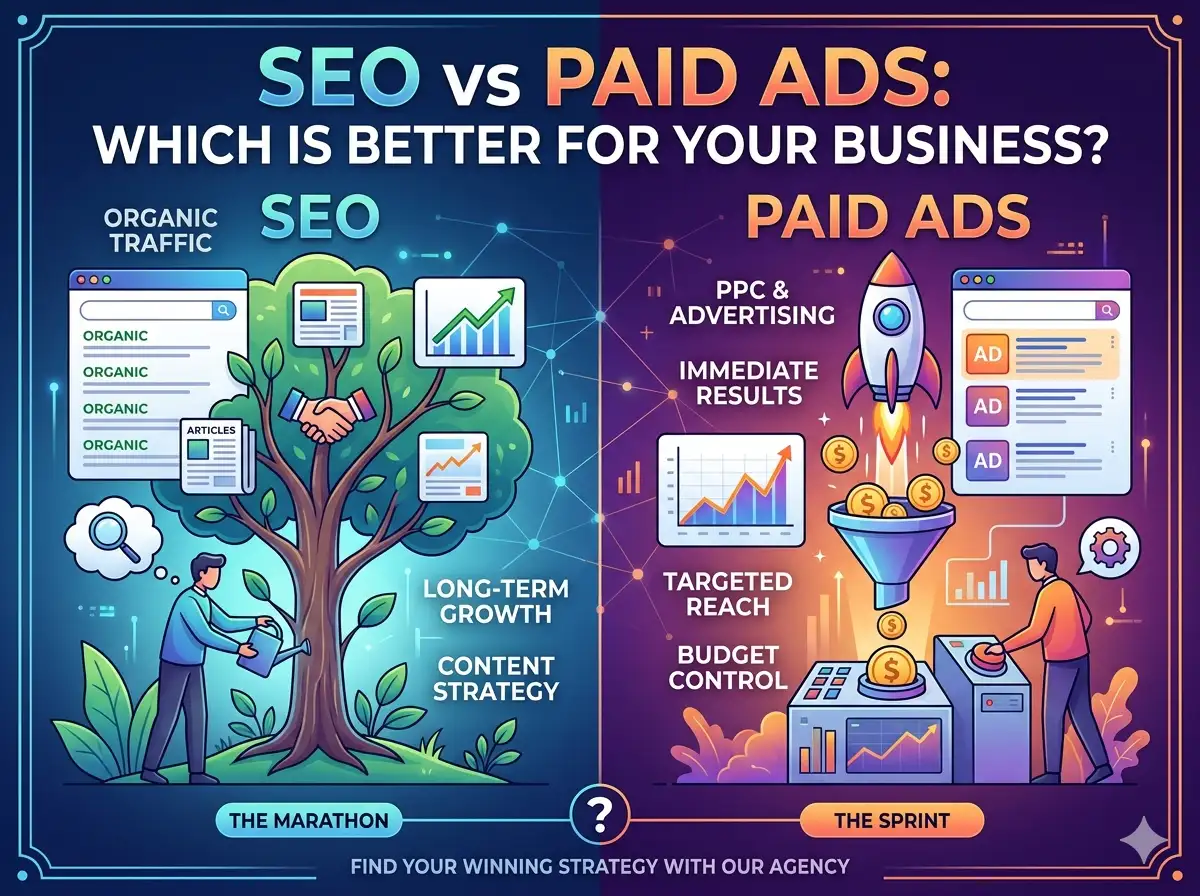
Both approaches can deliver impressive results—but they work in very different ways. One builds long-term organic visibility, while the other offers instant traffic and quick wins.
So the big question is:
Which one is better for your business—SEO or Paid Ads?
The answer isn’t as simple as choosing one over the other. It depends on your business goals, budget, timeline, and growth strategy. In this guide, we’ll break down everything you need to know to make the right decision.
What is SEO?
Search Engine Optimization (SEO) is the process of improving your website’s visibility in organic (non-paid) search engine results.
When your website ranks higher on search engines like Google, you get free, consistent traffic from users actively searching for your products or services.
Key Components of SEO:
- On-Page SEO – Optimizing content, keywords, headings, and meta tags
- Technical SEO – Improving site speed, mobile-friendliness, and structure
- Off-Page SEO – Building backlinks and domain authority
- Content Marketing – Creating valuable, keyword-focused content
Example:
If someone searches “best digital marketing agency in Pune”, SEO helps your website appear on top organically.
What are Paid Ads (PPC)?
Paid Advertising, often called Pay-Per-Click (PPC), is a strategy where businesses pay to appear at the top of search engine results or on social media platforms.
You bid on keywords, and your ads are shown to users searching for those terms.
Popular Paid Ad Platforms:
- Google Ads (Search & Display)
- Facebook & Instagram Ads
- LinkedIn Ads
- YouTube Ads
Example:
If you run Google Ads for “SEO services in Pune”, your ad can appear at the top instantly—even above organic results.
SEO vs Paid Ads: Key Differences
1. Cost Structure
SEO:
- No cost per click
- Requires investment in content, tools, and expertise
- Cost-effective in the long run
Paid Ads:
- You pay for every click
- Budget determines visibility
- Can become expensive over time
👉 Verdict:
SEO is more affordable long-term, while Paid Ads require continuous investment.
2. Time to See Results
SEO:
- Takes 3–6 months (or more) to see results
- Slow but sustainable growth
Paid Ads:
- Instant visibility and traffic
- Results can start within hours
👉 Verdict:
Paid Ads win for speed; SEO wins for long-term stability.
3. Sustainability
SEO:
- Traffic continues even if you stop investing temporarily
- Builds long-term digital assets
Paid Ads:
- Traffic stops immediately when you pause campaigns
👉 Verdict:
SEO is more sustainable.
4. Trust & Credibility
SEO:
- Organic results are more trusted by users
- Builds brand authority
Paid Ads:
- Some users skip ads
- Seen as promotional
👉 Verdict:
SEO builds stronger credibility.
5. Targeting Capabilities
SEO:
- Limited control over who sees your content
- Based on search intent
Paid Ads:
- Advanced targeting (location, age, interests, behavior)
- Highly customizable campaigns
👉 Verdict:
Paid Ads offer better targeting.
6. Click-Through Rate (CTR)
- Organic results often get higher CTR
- Ads dominate top positions but may be skipped
👉 Verdict:
Depends on industry, but SEO often gets better engagement over time.
When Should You Choose SEO?
SEO is the best choice if:
✅ You want long-term growth
SEO builds a strong online presence that continues to generate traffic over time.
✅ You have a limited budget
Once rankings improve, traffic is essentially free.
✅ You want to build brand authority
Ranking organically positions your business as a trusted source.
✅ You are in a competitive industry
Strong SEO helps you stay ahead consistently.
When Should You Choose Paid Ads?
Paid Ads are ideal if:
✅ You need quick results
Perfect for product launches, promotions, or seasonal campaigns.
✅ You want instant visibility
Get to the top of search results immediately.
✅ You have a flexible marketing budget
Scaling ads requires ongoing investment.
✅ You want precise targeting
Reach specific audiences based on demographics and behavior.
SEO vs Paid Ads: Which is Better for Different Businesses?
For Startups
- Use Paid Ads for quick traction
- Start SEO simultaneously for long-term growth
For Small Businesses
- Focus on local SEO
- Use ads for lead generation
For E-commerce
- Use ads for product promotions
- SEO for organic product discovery
For Service-Based Businesses
- Combine both for maximum leads
- SEO builds trust, ads bring quick inquiries
The Smart Strategy: Combine SEO and Paid Ads
Instead of choosing one, the most successful businesses use both strategies together.
How They Work Together:
- Use Paid Ads for immediate traffic
- Invest in SEO for long-term visibility
- Retarget visitors through ads
- Use SEO insights to optimize ad campaigns
Example Strategy:
- Run Google Ads for high-converting keywords
- Create SEO content around the same keywords
- Capture leads through landing pages
- Retarget users with display ads
👉 This approach maximizes ROI and reduces dependency on one channel.
Common Mistakes to Avoid
- Relying only on Paid Ads (high long-term cost)
- Ignoring SEO (missing organic growth)
- Expecting instant results from SEO
- Not tracking performance metrics
- Poor keyword targeting
Final Verdict: Which is Better?
There is no one-size-fits-all answer.
- Choose SEO if you want sustainable, long-term growth
- Choose Paid Ads if you need fast results and quick leads
- Choose Both if you want the best results
👉 The real success lies in balancing both strategies effectively.
Conclusion
SEO and Paid Ads are not competitors—they are complementary strategies that serve different purposes in your marketing funnel.
While SEO builds a strong foundation and credibility, Paid Ads provide the speed and precision needed to scale quickly.
If you want to grow your business in today’s digital world, the smartest move is to integrate both into a unified strategy.